Trump’s ‘Peanuts’ Gas Price Remark Exposes the Political Risk of America’s New Fuel Shock
As fuel costs surge during the Iran conflict, Donald Trump’s dismissal of rising gasoline prices has sharpened concerns over inflation, household strain, and a widening disconnect between economic data and daily life.
The story is fundamentally about the economic and political consequences of a new energy shock driven by the Trump administration’s confrontation with Iran, and how President Donald Trump’s public response has intensified scrutiny of his handling of the cost of living.
Trump triggered a backlash after dismissing rapidly rising gasoline prices as “peanuts” while defending the economic pain associated with the ongoing Iran conflict.
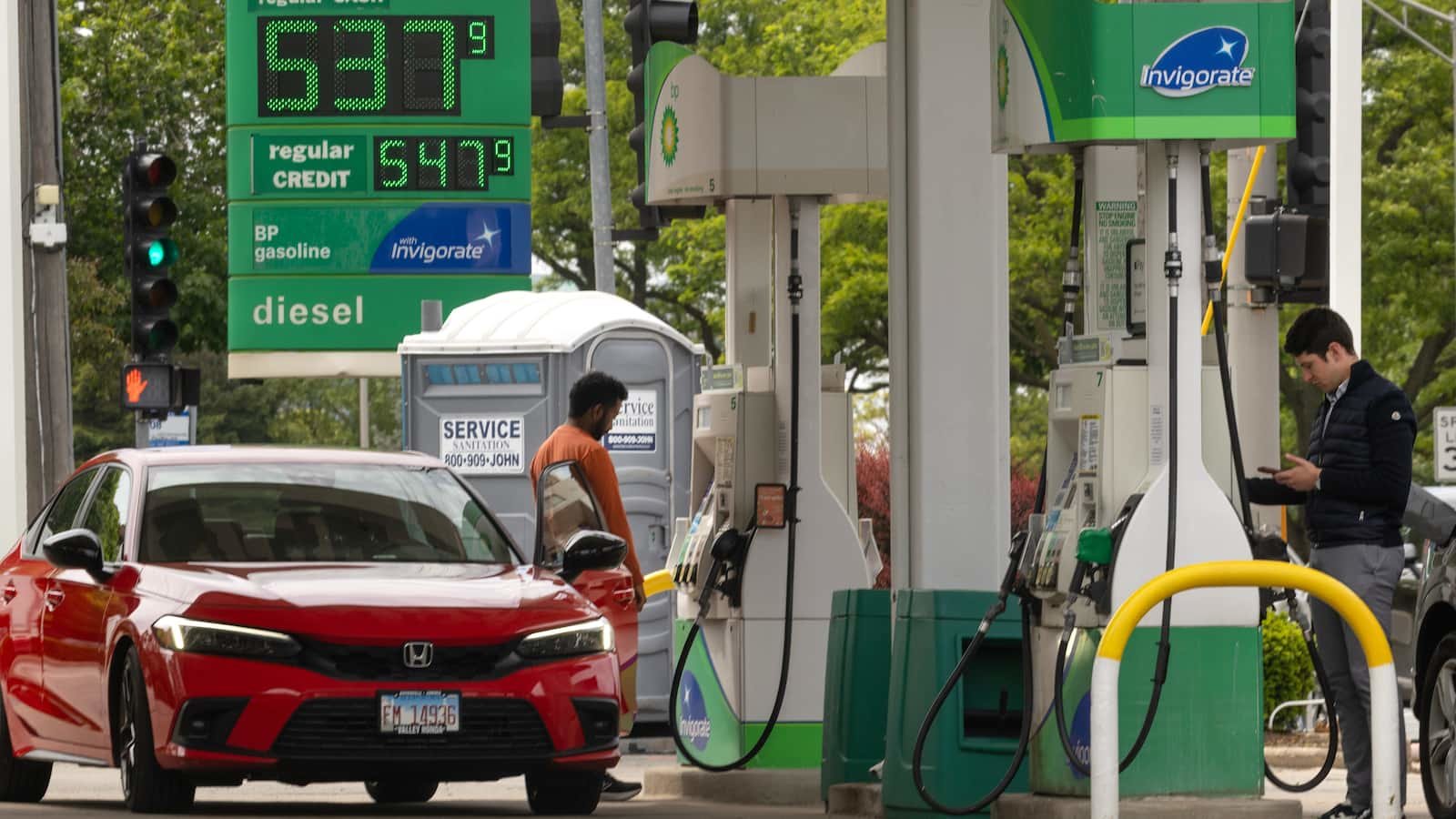
He argued that preventing Iran from obtaining nuclear weapons outweighed temporary hardship at the pump and told Americans to tolerate higher costs for “a little while.” The comments came as average US gasoline prices climbed above four dollars and fifty cents per gallon nationally, with substantially higher prices in parts of California and the Northeast.
The fuel spike is not an isolated inflation event.
It is directly tied to instability in global oil markets after military escalation involving the United States, Israel, and Iran disrupted shipping through the Strait of Hormuz, one of the world’s most critical oil transit corridors.
Roughly one-fifth of globally traded crude oil normally passes through that route.
Any sustained disruption immediately tightens global supply expectations, raises futures prices, and feeds into gasoline and diesel costs worldwide.
That mechanism matters because gasoline prices in the United States function as both an economic and political pressure gauge.
Fuel costs move quickly, are publicly visible, and hit lower-income households disproportionately hard.
Unlike broader inflation metrics, gasoline prices are encountered directly by consumers several times a week.
A rise of even one dollar per gallon can materially alter commuting costs, delivery expenses, food prices, and discretionary spending.
The current shock is particularly severe for workers whose livelihoods depend on transportation.
Truck drivers, contractors, rideshare operators, delivery workers, and suburban commuters are absorbing immediate cost increases.
Diesel prices have risen even faster than regular gasoline, amplifying pressure across supply chains.
Freight companies pass higher fuel costs into shipping rates, retailers raise prices, and inflation spreads through the wider economy.
The political danger for Trump is not simply that gas prices are high.
It is that he appears publicly detached from the burden they create.
His remarks have reinforced a growing perception that the administration views household economic pain as secondary to geopolitical objectives.
That perception carries unusual risk because Trump returned to office promising aggressive relief from inflation and lower energy costs.
Recent consumer sentiment data shows confidence collapsing across multiple demographic groups, including Republicans and independents.
Surveys indicate lower-income Americans and non-college-educated voters are reporting the sharpest deterioration in economic confidence.
Those constituencies formed a central part of Trump’s electoral coalition.
The administration argues that the price spike is temporary and strategically necessary.
Trump and his allies maintain that confronting Iran now prevents a larger regional crisis later.
They also point to strong stock market performance and continued domestic oil production as evidence that the broader economy remains resilient.
But those arguments collide with the lived reality of household budgeting.
Wage growth has failed to fully offset higher fuel and transportation costs.
Americans are cutting discretionary travel, reducing spending, delaying purchases, and changing commuting habits.
The pressure is especially visible heading into the summer driving season, when fuel demand normally rises even without geopolitical disruption.
The controversy also exposes a broader contradiction in Trump’s energy messaging.
During his campaigns and early months back in office, he repeatedly highlighted low gasoline prices as proof of economic competence.
Now, with prices surging during an international conflict tied directly to US foreign policy, the White House has shifted toward portraying high energy prices as an acceptable national sacrifice.
That shift has created openings for critics in both parties.
Some Republicans fear prolonged fuel inflation could damage congressional candidates ahead of the midterms, particularly in suburban swing districts where commuting costs are politically sensitive.
Democrats are increasingly framing the administration as indifferent to middle-class financial strain.
At the same time, the administration faces structural limits on how quickly it can reverse the problem.
Releasing oil from strategic reserves can soften market panic temporarily, but it cannot fully stabilize prices if shipping routes remain threatened or if traders expect prolonged instability in the Persian Gulf.
Domestic production increases also take time to influence retail gasoline prices.
The deeper issue is that energy inflation behaves differently from many other forms of price pressure.
Consumers may tolerate rising prices for durable goods or luxury items more gradually.
Fuel costs, by contrast, function almost like a recurring tax on mobility and work.
Every commute, delivery, school run, or business trip becomes more expensive immediately.
Trump’s “peanuts” remark therefore landed at a moment when many Americans already felt financially exposed.
For wealthier households, higher gasoline prices are often manageable.
For lower-income workers driving long distances or operating fuel-intensive businesses, they are not marginal expenses.
They directly affect rent payments, grocery budgets, debt servicing, and savings.
The administration is now balancing two competing priorities: sustaining pressure on Iran while preventing the conflict from becoming identified domestically with inflation, economic anxiety, and declining living standards.
That balance is becoming harder to maintain as fuel prices remain elevated and consumer confidence deteriorates.
The immediate consequence is that gasoline prices have moved from being an economic indicator to becoming one of the defining political tests of Trump’s second term, with energy costs now shaping public judgment about both foreign policy and economic competence at the same time.
Trump triggered a backlash after dismissing rapidly rising gasoline prices as “peanuts” while defending the economic pain associated with the ongoing Iran conflict.
He argued that preventing Iran from obtaining nuclear weapons outweighed temporary hardship at the pump and told Americans to tolerate higher costs for “a little while.” The comments came as average US gasoline prices climbed above four dollars and fifty cents per gallon nationally, with substantially higher prices in parts of California and the Northeast.
The fuel spike is not an isolated inflation event.
It is directly tied to instability in global oil markets after military escalation involving the United States, Israel, and Iran disrupted shipping through the Strait of Hormuz, one of the world’s most critical oil transit corridors.
Roughly one-fifth of globally traded crude oil normally passes through that route.
Any sustained disruption immediately tightens global supply expectations, raises futures prices, and feeds into gasoline and diesel costs worldwide.
That mechanism matters because gasoline prices in the United States function as both an economic and political pressure gauge.
Fuel costs move quickly, are publicly visible, and hit lower-income households disproportionately hard.
Unlike broader inflation metrics, gasoline prices are encountered directly by consumers several times a week.
A rise of even one dollar per gallon can materially alter commuting costs, delivery expenses, food prices, and discretionary spending.
The current shock is particularly severe for workers whose livelihoods depend on transportation.
Truck drivers, contractors, rideshare operators, delivery workers, and suburban commuters are absorbing immediate cost increases.
Diesel prices have risen even faster than regular gasoline, amplifying pressure across supply chains.
Freight companies pass higher fuel costs into shipping rates, retailers raise prices, and inflation spreads through the wider economy.
The political danger for Trump is not simply that gas prices are high.
It is that he appears publicly detached from the burden they create.
His remarks have reinforced a growing perception that the administration views household economic pain as secondary to geopolitical objectives.
That perception carries unusual risk because Trump returned to office promising aggressive relief from inflation and lower energy costs.
Recent consumer sentiment data shows confidence collapsing across multiple demographic groups, including Republicans and independents.
Surveys indicate lower-income Americans and non-college-educated voters are reporting the sharpest deterioration in economic confidence.
Those constituencies formed a central part of Trump’s electoral coalition.
The administration argues that the price spike is temporary and strategically necessary.
Trump and his allies maintain that confronting Iran now prevents a larger regional crisis later.
They also point to strong stock market performance and continued domestic oil production as evidence that the broader economy remains resilient.
But those arguments collide with the lived reality of household budgeting.
Wage growth has failed to fully offset higher fuel and transportation costs.
Americans are cutting discretionary travel, reducing spending, delaying purchases, and changing commuting habits.
The pressure is especially visible heading into the summer driving season, when fuel demand normally rises even without geopolitical disruption.
The controversy also exposes a broader contradiction in Trump’s energy messaging.
During his campaigns and early months back in office, he repeatedly highlighted low gasoline prices as proof of economic competence.
Now, with prices surging during an international conflict tied directly to US foreign policy, the White House has shifted toward portraying high energy prices as an acceptable national sacrifice.
That shift has created openings for critics in both parties.
Some Republicans fear prolonged fuel inflation could damage congressional candidates ahead of the midterms, particularly in suburban swing districts where commuting costs are politically sensitive.
Democrats are increasingly framing the administration as indifferent to middle-class financial strain.
At the same time, the administration faces structural limits on how quickly it can reverse the problem.
Releasing oil from strategic reserves can soften market panic temporarily, but it cannot fully stabilize prices if shipping routes remain threatened or if traders expect prolonged instability in the Persian Gulf.
Domestic production increases also take time to influence retail gasoline prices.
The deeper issue is that energy inflation behaves differently from many other forms of price pressure.
Consumers may tolerate rising prices for durable goods or luxury items more gradually.
Fuel costs, by contrast, function almost like a recurring tax on mobility and work.
Every commute, delivery, school run, or business trip becomes more expensive immediately.
Trump’s “peanuts” remark therefore landed at a moment when many Americans already felt financially exposed.
For wealthier households, higher gasoline prices are often manageable.
For lower-income workers driving long distances or operating fuel-intensive businesses, they are not marginal expenses.
They directly affect rent payments, grocery budgets, debt servicing, and savings.
The administration is now balancing two competing priorities: sustaining pressure on Iran while preventing the conflict from becoming identified domestically with inflation, economic anxiety, and declining living standards.
That balance is becoming harder to maintain as fuel prices remain elevated and consumer confidence deteriorates.
The immediate consequence is that gasoline prices have moved from being an economic indicator to becoming one of the defining political tests of Trump’s second term, with energy costs now shaping public judgment about both foreign policy and economic competence at the same time.
AI Disclaimer: An advanced artificial intelligence (AI) system generated the content of this page on its own. This innovative technology conducts extensive research from a variety of reliable sources, performs rigorous fact-checking and verification, cleans up and balances biased or manipulated content, and presents a minimal factual summary that is just enough yet essential for you to function as an informed and educated citizen. Please keep in mind, however, that this system is an evolving technology, and as a result, the article may contain accidental inaccuracies or errors. We urge you to help us improve our site by reporting any inaccuracies you find using the "Contact Us" link at the bottom of this page. Your helpful feedback helps us improve our system and deliver more precise content. When you find an article of interest here, please look for the full and extensive coverage of this topic in traditional news sources, as they are written by professional journalists that we try to support, not replace. We appreciate your understanding and assistance.