Florida Times

Florida: Driving America's New Greatness.
Sunday, Apr 19, 2026

Strait of Hormuz Reopens Briefly Amid Fragile Middle East Ceasefire as Global Tensions Persist

Strait of Hormuz Reopens Briefly Amid Fragile Middle East Ceasefire as Global Tensions Persist

A fragile ceasefire in the Middle East has triggered a temporary reopening of the strategically vital Strait of Hormuz, offering brief relief to global energy markets — but the situation remains highly volatile, with military tensions, humanitarian crises, and geopolitical uncertainty continuing to escalate.

Temporary Opening of a Critical Global Oil Route

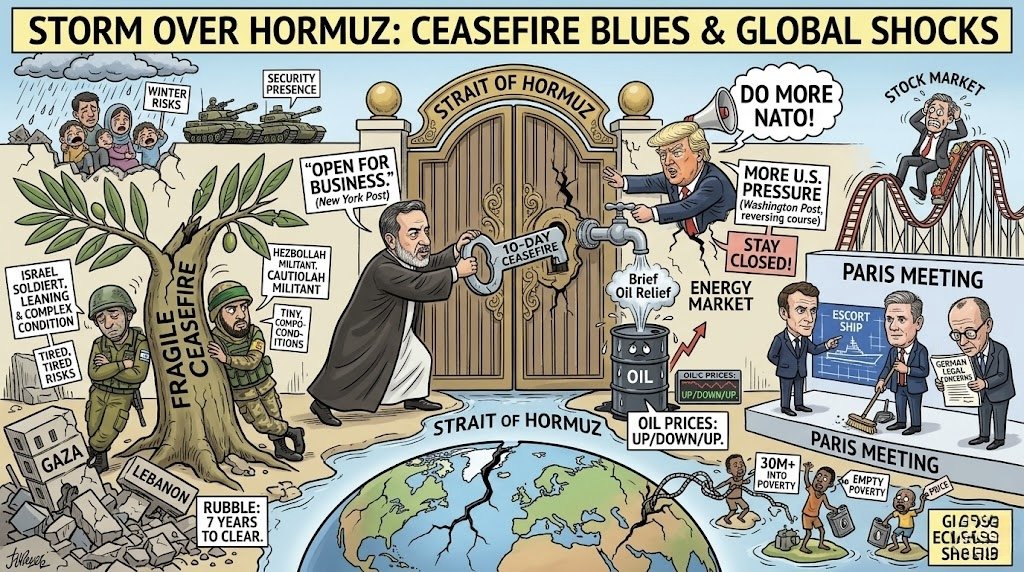
Iran’s Foreign Minister Abbas Araqchi announced that the Strait of Hormuz would remain “completely open for business” during the duration of a newly brokered 10-day ceasefire between Israel and Lebanon. 

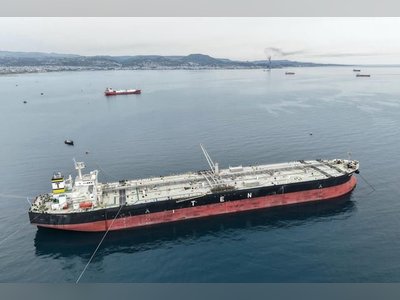
The strait — one of the world’s most important maritime chokepoints, carrying roughly a fifth of global oil shipments — had been severely disrupted during weeks of escalating conflict involving Iran, Israel, and the United States. 

Iran stated that commercial vessels could transit via coordinated maritime routes, while international actors began preparing plans to restore secure navigation.

However, optimism proved short-lived. Within days, Iran reversed course and reimposed restrictions on the strait, citing continued U.S. naval pressure and unresolved tensions. 


NATO Allies Prepare Defensive Maritime Mission

As instability around the Strait intensified, a coalition of mainly European and NATO-aligned countries convened in Paris to develop a plan to secure maritime traffic.

The initiative — led by French President Emmanuel Macron and joined by UK Prime Minister Keir Starmer and German Chancellor Friedrich Merz — is expected to include:

  • Military escort vessels
  • Mine-clearing operations
  • Advanced radar and surveillance systems

European leaders emphasized that the mission would be strictly defensive, aimed at ensuring safe passage rather than escalating military involvement.

Germany signaled that its participation would depend on:

  • A sustained ceasefire
  • A multilateral legal framework
  • Potential United Nations authorization

The effort follows pressure from U.S. President Donald Trump, who reportedly urged NATO allies to take a more active role in securing global shipping routes.


Ceasefire Between Israel and Lebanon Offers Limited Relief

The maritime developments are closely tied to a U.S.-brokered 10-day ceasefire between Israel and Lebanon, which came into effect on April 16, 2026. 

The agreement aims to pause hostilities and create space for negotiations after weeks of intense fighting between Israeli forces and Hezbollah.

  • Israel has agreed to halt offensive operations
  • Lebanese authorities are expected to restrain armed groups
  • Hezbollah is not a formal signatory but has signaled conditional compliance

Despite the agreement, tensions remain high:

  • Israel insists it will maintain a security presence in southern Lebanon
  • It reserves the right to carry out preemptive strikes
  • Reports of violations and continued clashes have already emerged

President Trump expressed confidence that all parties — including Hezbollah — would respect the ceasefire, though analysts remain skeptical.


Global Markets React — Then Recoil

The initial announcement of the Strait’s reopening led to:

  • A sharp drop in oil prices
  • Positive movement in global stock markets

But renewed instability quickly reversed market optimism.

Attacks on vessels, military warnings, and conflicting statements from Tehran and Washington have reinforced the perception that the situation remains unpredictable and fragile. 


Humanitarian Crisis Deepens Across the Region

While diplomatic efforts focus on ceasefires and trade routes, the humanitarian toll continues to mount:

Lebanon

  • More than 2,000 deaths reported since the escalation
  • Over 1 million people displaced

Gaza

  • Approximately 90% of the population displaced
  • Around 320,000 buildings damaged or destroyed
  • Severe risks from:
    • Structural collapse
    • Flooding and exposure
    • Unexploded ordnance
    • Toxic debris including asbestos

The United Nations estimates that:

  • Clearing rubble alone could take up to 7 years
  • Full reconstruction may take decades and cost over $40 billion

Winter conditions have further worsened living conditions, with flooding and cold exposure posing life-threatening risks.


Global Economic Fallout Expands

The conflict’s impact is no longer regional.

The United Nations Development Programme warns that ongoing escalation could push more than 30 million people into poverty worldwide, particularly affecting:

  • Sub-Saharan Africa
  • Small island developing states
  • Energy-import-dependent economies

Disruptions to fuel supply chains and rising costs are already being felt globally, reinforcing the broader economic consequences of the crisis.


A Conflict With No Clear Endgame

Despite diplomatic activity, several key issues remain unresolved:

  • The role and disarmament of Hezbollah
  • Israel’s military presence in Lebanon
  • U.S.–Iran tensions and naval confrontations
  • Control and security of the Strait of Hormuz

The ceasefire is widely viewed as temporary and fragile, rather than a definitive step toward peace.


Sum Up

The brief reopening of the Strait of Hormuz offered a glimpse of stabilization in a region under extreme strain — but the rapid reversal underscores a deeper reality:

The Middle East remains on edge, where ceasefires are tentative, alliances are shifting, and the global consequences are immediate.

Even if hostilities pause, the structural damage — humanitarian, economic, and geopolitical — will shape the region and the world for years to come.

AI Disclaimer: An advanced artificial intelligence (AI) system generated the content of this page on its own. This innovative technology conducts extensive research from a variety of reliable sources, performs rigorous fact-checking and verification, cleans up and balances biased or manipulated content, and presents a minimal factual summary that is just enough yet essential for you to function as an informed and educated citizen. Please keep in mind, however, that this system is an evolving technology, and as a result, the article may contain accidental inaccuracies or errors. We urge you to help us improve our site by reporting any inaccuracies you find using the "Contact Us" link at the bottom of this page. Your helpful feedback helps us improve our system and deliver more precise content. When you find an article of interest here, please look for the full and extensive coverage of this topic in traditional news sources, as they are written by professional journalists that we try to support, not replace. We appreciate your understanding and assistance.
Newsletter

Related Articles

0:00
0:00
Close
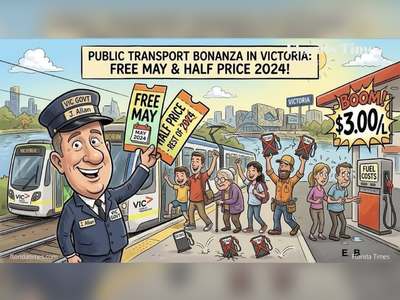
Travel on all public transport in the Australian state of Victoria will be free in May and then half price for the remainder of this year as the government ramps up help for consumers battling high fuel costs
Starmer and Trump Hold Strategic Talks on Securing Strait of Hormuz Amid Rising Tensions
James Blair Weighs Temporary Exit from White House to Support Trump Political Efforts
White House Engagement With Indiana Senate Candidate Revealed Through Calls and Messages
White House Staff Advised Against Betting on Prediction Markets in Internal Warning
Vatican Official Notes Unusual Nature of Cardinal’s Pentagon Meeting
Democratic Party Faces Funding Shortfall Despite Anticipated Post-Election Boost
Trump Confronts Inflation Surge Linked to Iran Conflict as Markets React
Non-Compete Ban in Washington State Sparks Optimism and Debate Across Tech Sector
Plans Unveiled for 250-Foot Monumental Arch in Washington Reflecting Trump’s Vision
US Negotiators Set to Press Iran for Release of Detained Americans
Strategic Saudi-Bahrain Causeway Closed Amid Security Concerns as Trump Deadline Approaches
Saudi Shift Away from Longstanding Dollar Oil Framework Gains Attention Amid Iran Conflict
Starmer Voices Frustration as Global Tensions Drive Up UK Energy Costs
Australia Emphasizes Rule of Law in Shifting Global Landscape as Trump Era Reshapes Geopolitics
Melania Trump Issues White House Statement Rejecting Allegations and Reaffirming Integrity
George Clooney Responds to White House Remarks Amid Political and Cultural Exchange
White House Highlights New Ballroom as Key Security Enhancement for Presidential Operations
Easter Message from USDA Secretary Sparks Internal Debate Over Workplace Communication
Washington Adjusts Tax Structure with Rollbacks Amid Introduction of Income Tax
Israel Pursues Direct Talks with Lebanon While Maintaining Pressure on Hezbollah
Digital Detox Research Suggests Potential to Reverse Long-Term Effects of Social Media Overuse
Strategic Openings Suggest Path for Trump to Secure Breakthrough on Iran
Chinese Firm’s Washington Outreach Linked to Trump-Era Networks Yields Policy Breakthrough
UK Urges Inclusion of Lebanon in US-Iran Ceasefire Framework
Starmer Voices Frustration Over Global Pressures Driving UK Energy Costs Higher
Canada Aligns With US, UK and Australia as Europe Prepares Major Digital Border Overhaul
Global Markets Jolt as Iran Signals Ceasefire Breakdown and Rising Regional Tensions
Trump Calls for Toll-Free Reopening of Strait of Hormuz to Safeguard Global Trade
Oil Industry Urges White House to Secure Strait of Hormuz as Supply Concerns Mount
Trump and First Lady Host White House Easter Egg Roll Celebrating Tradition and Unity
White House Challenges NATO Position on Iran as Trump Holds Talks with Alliance Chief
White House Plans Major Workforce Reduction at TSA as Part of Efficiency Drive
White House Highlights Trump’s Firm Stance on Hormuz Access and Global Stability
Iran Raises Allegations of Ceasefire Breaches as Fragile Truce Faces Early Strain
Trump Offers Two-Week Pause in Military Action Tied to Strait of Hormuz Reopening
US Officials Strike Different Tones as Post-Conflict Messaging on Iran Develops
California Supreme Court Blocks Sheriff’s Attempt to Seize Hundreds of Thousands of Ballots
Trump Administration Set to Reduce Proposed Funding for Iran Conflict Efforts
Washington State Declares Fresh Drought Emergency as Water Shortages Persist
Saudi Arabia Welcomes Trump’s Leadership in Securing US–Iran Ceasefire
Saudi Arabia Voices Concern Over Fragile US–Iran Ceasefire Stability
Starmer Warns Sustained Effort Needed to Ensure US–Iran Ceasefire Holds
Albanese Welcomes Ceasefire Progress While Addressing Differences with Trump’s Strong Rhetoric
President Trump Addresses Nation with Message of Strength and Strategic Resolve
White House Rejects Claims Trump Considering Nuclear Option in Iran Conflict
White House Says Trump Reviewing Pakistani Proposal With Response Expected
Scrutiny of DHS Spending Sheds Light on Kristi Noem’s Leadership Approach
Kidnapped US Journalist Shelly Kittleson Freed in Prisoner Exchange in Iraq
Army Secretary Signals Stability After Dispute with Pete Hegseth
×