Washington Launches $112 Million Program to Accelerate Business Shift to Electric Vehicles
State voucher scheme targets commercial fleets, aiming to cut upfront EV costs for trucks and heavy equipment amid infrastructure and adoption challenges
SYSTEM-DRIVEN — The story centers on a state funding and incentive mechanism designed to reshape how businesses acquire commercial vehicles, specifically by reducing the financial barriers to electric adoption in the freight and industrial sectors.
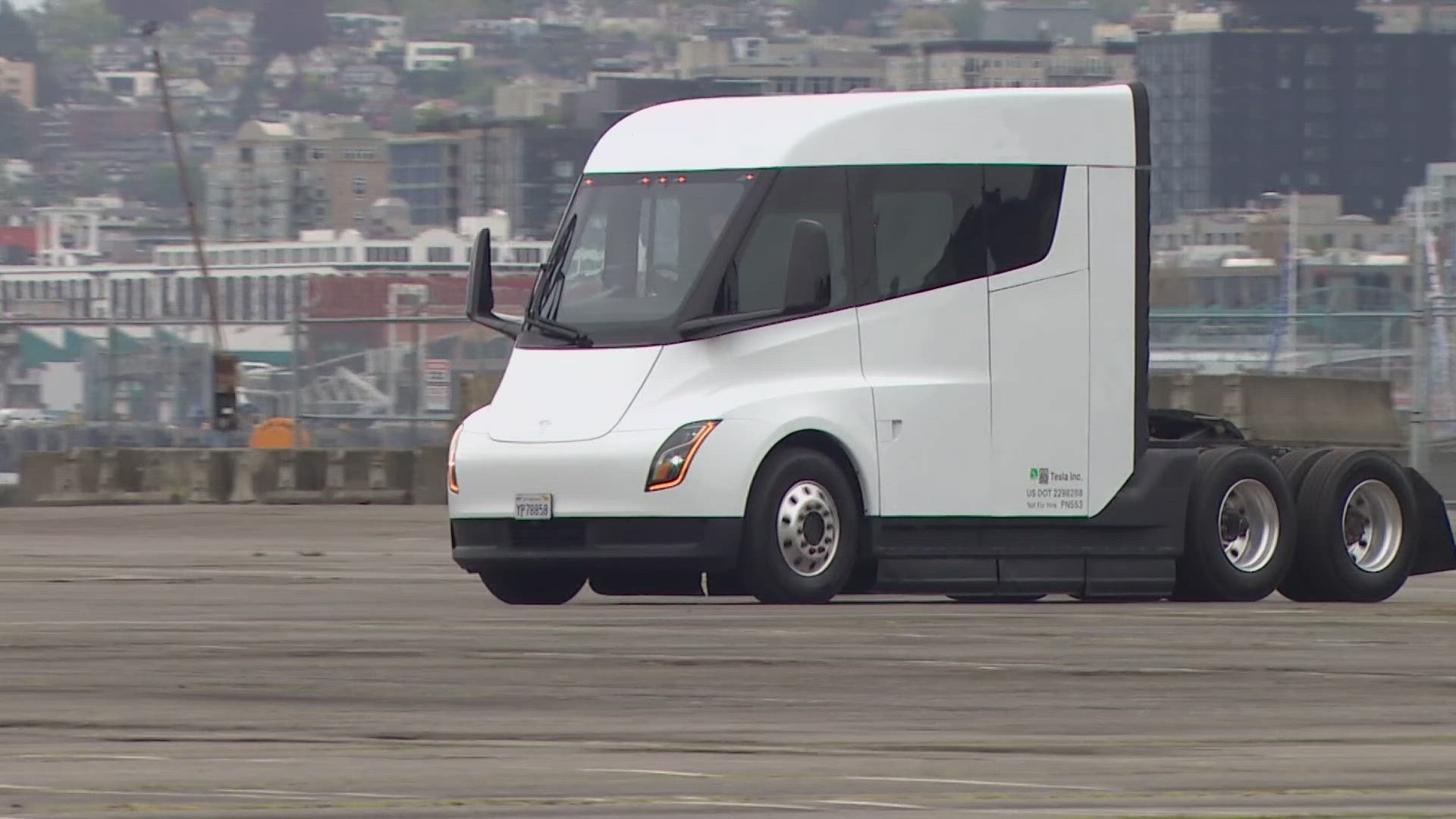
Washington state has introduced a $112 million public incentive program designed to speed up the adoption of electric vehicles in commercial operations, particularly medium- and heavy-duty fleets such as trucks, construction equipment, and industrial machinery.
The initiative operates through a voucher system that reduces the upfront purchase price of eligible zero-emission vehicles, effectively shifting part of the cost from private buyers to state-funded subsidies.
What is confirmed across state implementation planning is that the program is financed through Washington’s climate policy revenue streams and administered by transportation authorities in coordination with a specialized program operator.
It is structured as a point-of-sale discount system rather than a reimbursement model, meaning businesses receive financial relief at the moment of purchase.
Eligible equipment spans a wide range of commercial categories, including freight trucks, delivery vehicles, agricultural machines, forklifts, airport ground equipment, and related charging or fueling infrastructure components.
The program is designed with differentiated incentives, offering larger subsidies for small businesses and varying support levels depending on vehicle class and emissions reduction potential.
It is part of a broader state effort to decarbonize the transportation sector, which remains one of the largest sources of greenhouse gas emissions in Washington.
The policy enters the market at a moment when commercial electric vehicle adoption faces structural friction.
Fleet operators continue to cite high upfront vehicle costs, limited charging infrastructure, and operational constraints such as range limitations and reduced cargo capacity compared with diesel equivalents.
These constraints have slowed adoption even as technological capability has improved and more models have entered the market.
State-level assessments cited in recent reporting indicate that electric vehicle sales trends have softened in the broader market, adding pressure on policymakers to use direct subsidies to maintain momentum in commercial electrification.
Officials behind the program argue that lowering acquisition costs is essential to bridging the gap between early adoption and large-scale fleet transition.
The program also reflects a strategic economic calculation: transportation electrification is viewed not only as an emissions reduction tool but as a long-term operating cost shift for businesses.
Electric fleets typically have lower fuel and maintenance costs over time, but the initial capital barrier remains the primary obstacle the state is attempting to address.
While the initiative does not directly fund charging infrastructure expansion, it is being introduced alongside ongoing state investments in charging networks and grid readiness.
This separation has become a point of tension among industry participants, as vehicle adoption without synchronized infrastructure growth can limit real-world deployment.
The rollout is structured as a first-come, first-served system, meaning funding availability is expected to be consumed quickly if demand matches projections.
Businesses are being encouraged to prepare applications and coordinate with approved dealers in advance of full program activation.
In practical terms, the program represents a state-led attempt to compress the timeline of commercial fleet electrification by directly intervening in purchase economics, betting that sustained subsidies can overcome current market friction and accelerate the transition away from diesel-dependent logistics and industrial transport systems.
Washington state has introduced a $112 million public incentive program designed to speed up the adoption of electric vehicles in commercial operations, particularly medium- and heavy-duty fleets such as trucks, construction equipment, and industrial machinery.
The initiative operates through a voucher system that reduces the upfront purchase price of eligible zero-emission vehicles, effectively shifting part of the cost from private buyers to state-funded subsidies.
What is confirmed across state implementation planning is that the program is financed through Washington’s climate policy revenue streams and administered by transportation authorities in coordination with a specialized program operator.
It is structured as a point-of-sale discount system rather than a reimbursement model, meaning businesses receive financial relief at the moment of purchase.
Eligible equipment spans a wide range of commercial categories, including freight trucks, delivery vehicles, agricultural machines, forklifts, airport ground equipment, and related charging or fueling infrastructure components.
The program is designed with differentiated incentives, offering larger subsidies for small businesses and varying support levels depending on vehicle class and emissions reduction potential.
It is part of a broader state effort to decarbonize the transportation sector, which remains one of the largest sources of greenhouse gas emissions in Washington.
The policy enters the market at a moment when commercial electric vehicle adoption faces structural friction.
Fleet operators continue to cite high upfront vehicle costs, limited charging infrastructure, and operational constraints such as range limitations and reduced cargo capacity compared with diesel equivalents.
These constraints have slowed adoption even as technological capability has improved and more models have entered the market.
State-level assessments cited in recent reporting indicate that electric vehicle sales trends have softened in the broader market, adding pressure on policymakers to use direct subsidies to maintain momentum in commercial electrification.
Officials behind the program argue that lowering acquisition costs is essential to bridging the gap between early adoption and large-scale fleet transition.
The program also reflects a strategic economic calculation: transportation electrification is viewed not only as an emissions reduction tool but as a long-term operating cost shift for businesses.
Electric fleets typically have lower fuel and maintenance costs over time, but the initial capital barrier remains the primary obstacle the state is attempting to address.
While the initiative does not directly fund charging infrastructure expansion, it is being introduced alongside ongoing state investments in charging networks and grid readiness.
This separation has become a point of tension among industry participants, as vehicle adoption without synchronized infrastructure growth can limit real-world deployment.
The rollout is structured as a first-come, first-served system, meaning funding availability is expected to be consumed quickly if demand matches projections.
Businesses are being encouraged to prepare applications and coordinate with approved dealers in advance of full program activation.
In practical terms, the program represents a state-led attempt to compress the timeline of commercial fleet electrification by directly intervening in purchase economics, betting that sustained subsidies can overcome current market friction and accelerate the transition away from diesel-dependent logistics and industrial transport systems.
AI Disclaimer: An advanced artificial intelligence (AI) system generated the content of this page on its own. This innovative technology conducts extensive research from a variety of reliable sources, performs rigorous fact-checking and verification, cleans up and balances biased or manipulated content, and presents a minimal factual summary that is just enough yet essential for you to function as an informed and educated citizen. Please keep in mind, however, that this system is an evolving technology, and as a result, the article may contain accidental inaccuracies or errors. We urge you to help us improve our site by reporting any inaccuracies you find using the "Contact Us" link at the bottom of this page. Your helpful feedback helps us improve our system and deliver more precise content. When you find an article of interest here, please look for the full and extensive coverage of this topic in traditional news sources, as they are written by professional journalists that we try to support, not replace. We appreciate your understanding and assistance.