Historian Labels Recent White House Briefing Language ‘Orwellian’ Amid Debate Over Public Communication
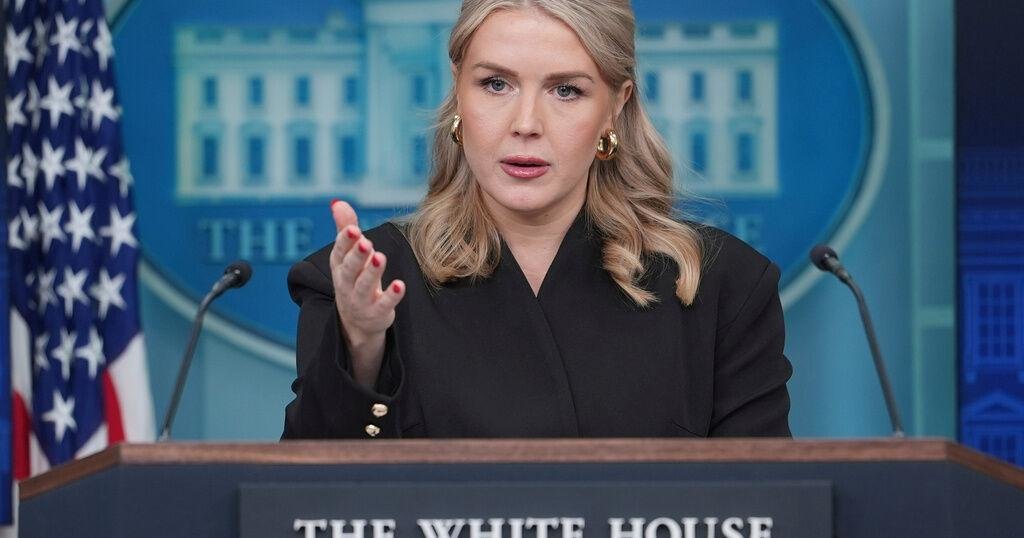
A historian specialising in political communication has likened recent White House press briefings to the “doublespeak” depicted in George Orwell’s dystopian novel 1984, arguing that certain language used by the administration echoes the manipulated rhetoric of the fictional totalitarian regime. The analysis, published this week, focuses in particular on statements by White House Press Secretary Karoline Leavitt during a December briefing, where she defended economic claims and responded to journalistic questioning with assertive rebuttals of media framing. According to the author, such exchanges illustrate how political language can be deployed in ways that blur straightforward factual presentation and challenge conventional journalistic scrutiny.
Observers of political discourse noted that the comparison draws on Orwell’s concept of “doublethink” — the simultaneous acceptance of two contradictory beliefs — and the use of language that can shape public perception. In her critique, the historian cited instances in which the press secretary reaffirmed the accuracy of official figures while pivoting sharply from follow-up questions, characterising such tactics as emblematic of messaging strategies that prioritise narrative control over simple transparency. The analysis has prompted broader debate among commentators about how government communications are crafted in an era of intense political polarisation and media scrutiny.
Supporters of the administration argue that press briefings remain an essential forum for conveying policy and defending the government’s record, asserting that vigorous rebuttal of questions is a legitimate aspect of political communication. They point to recent policy achievements and economic indicators as evidence that the administration has substantive accomplishments to discuss, and that strong messaging reflects confidence rather than obfuscation. Critics contend that comparisons to 1984 are part of a long tradition of invoking Orwell’s warnings about authoritarian language dynamics when public officials employ assertive or defensive rhetorical techniques. Despite differing interpretations, the debate underscores enduring concerns over how language and narrative shape public understanding in democratic societies.