Trump Administration Orders Most Green-Card Applicants to Leave the U.S. Before Applying
A sweeping immigration policy change sharply restricts adjustment-of-status applications inside the United States, exposing millions of temporary visa holders and undocumented immigrants to new legal and logistical risks.
The Trump administration has moved to fundamentally reshape the American immigration system by ordering most foreign nationals seeking permanent residency to apply for green cards from outside the United States rather than from within the country.
The policy change targets one of the most widely used legal pathways in modern immigration practice: adjustment of status.
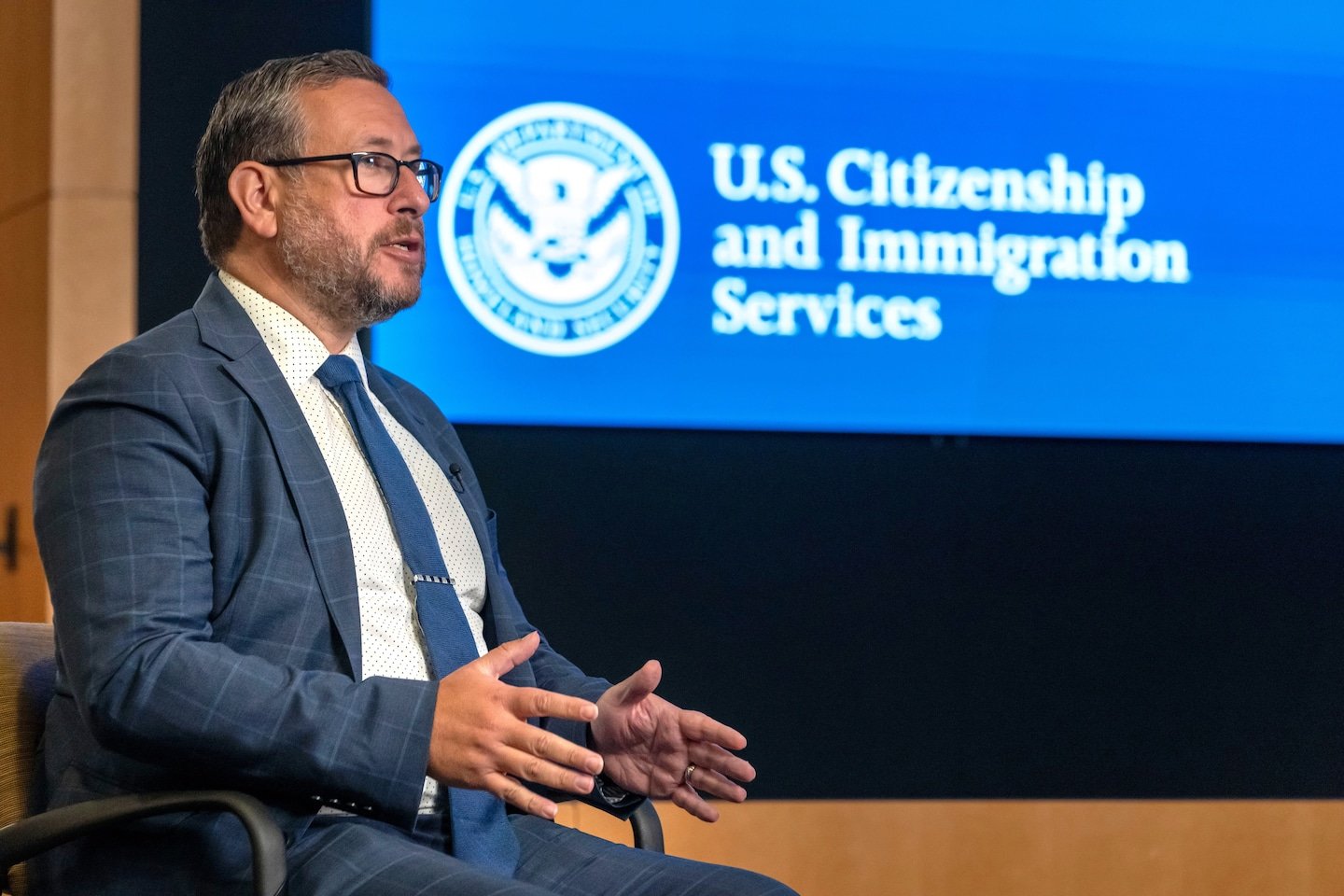
What is confirmed is that U.S. Citizenship and Immigration Services has issued a formal policy directive instructing immigration officers to treat adjustment-of-status requests as an “extraordinary” form of relief rather than a standard administrative process.
Under the new guidance, most applicants already living in the United States on temporary visas or humanitarian parole will be expected to leave the country and complete their applications through American consulates abroad.
The practical effect is enormous.
For decades, many immigrants who entered legally on student, tourist, temporary work, or exchange visas could remain inside the United States while transitioning toward lawful permanent residency.
That system allowed applicants to avoid lengthy separations from family members, employers, schools, and communities while their cases were processed.
The administration now argues that this practice drifted far beyond the original intent of immigration law.
Officials say temporary visas were designed for short-term stays tied to specific purposes, not as stepping stones toward permanent residence.
The new policy frames domestic adjustment of status as an exception rather than a norm.
The key issue is not simply paperwork location.
Leaving the United States can trigger severe legal consequences for many applicants.
Undocumented immigrants who depart after prolonged unlawful presence may face automatic reentry bans lasting three years, ten years, or longer.
Others risk becoming stranded abroad if consular processing is delayed or denied.
The policy reaches far beyond undocumented migrants.
Immigration lawyers say the directive could affect international students, temporary skilled workers, exchange visitors, spouses of U.S. citizens, researchers, professors, medical professionals, and executives employed by American companies.
Many of these individuals built long-term lives in the United States under the assumption that adjustment of status was a stable and legally accepted pathway.
The administration has indicated that certain visa categories with “dual intent” protections may still qualify for exceptions.
Dual-intent visas permit foreign nationals to work or study temporarily while also pursuing permanent residency.
But the policy memo gives immigration officers broad discretionary authority, creating uncertainty around how exemptions will actually be applied.
That uncertainty is already generating confusion throughout the immigration system.
Lawyers and advocacy groups say the government has not fully clarified how the rule will affect pending applications, ongoing family-based petitions, or applicants who have already invested years and substantial legal costs into the process.
Humanitarian organizations have reacted especially sharply.
Critics argue the rule could force trafficking survivors, abused children, asylum seekers, and politically vulnerable immigrants to return to countries they fled for safety reasons.
The administration says extraordinary cases can still receive discretionary relief, but advocacy groups warn that discretionary systems often produce inconsistent outcomes and extended delays.
The broader policy objective is consistent with the administration’s wider immigration agenda.
Since returning to office, President Donald Trump’s administration has tightened student visa rules, increased visa revocations, reduced humanitarian protections, expanded enforcement measures, and narrowed legal immigration pathways alongside its crackdown on unauthorized migration.
This latest directive marks a particularly consequential shift because it attacks the mechanics of legal immigration itself rather than focusing solely on border enforcement.
Adjustment of status became central to the modern U.S. immigration system partly because it reduced administrative bottlenecks, kept families together, and allowed employers to retain foreign talent without forcing applicants into prolonged overseas processing queues.
Consular processing abroad has historically moved more slowly and carries greater uncertainty.
Applicants can face extensive interview backlogs, country-specific security reviews, travel restrictions, and administrative delays that may last months or years.
A denial issued abroad can also leave applicants with fewer practical options to challenge decisions while remaining connected to jobs or family members in the United States.
Business groups are closely watching the implications for the labor market.
American employers in technology, healthcare, engineering, and higher education rely heavily on foreign workers who transition from temporary visas to permanent residency while remaining employed inside the country.
The new policy could complicate hiring pipelines and increase retention risks for companies dependent on international talent.
Supporters of the administration argue the measure restores integrity to immigration law and reduces incentives for visa overstays.
They contend that the prior system blurred the distinction between temporary and permanent immigration categories, encouraging misuse of short-term visas by people intending to remain permanently.
Opponents counter that adjustment of status has been embedded in immigration operations for generations and became an accepted mechanism precisely because global mobility, labor markets, and family migration patterns evolved beyond the assumptions of older immigration statutes.
Legal challenges are expected quickly.
Immigration attorneys and civil-liberties organizations are already preparing lawsuits questioning both the administration’s interpretation of existing law and the scope of executive discretion in limiting adjustment-of-status approvals.
Courts may ultimately determine how aggressively the policy can be implemented.
The immediate consequence, however, is already clear.
Millions of immigrants living legally or semi-legally inside the United States now face a far riskier and more uncertain route toward permanent residency, while the federal government shifts the center of the green-card process away from domestic immigration offices and back toward overseas consular control.
The policy change targets one of the most widely used legal pathways in modern immigration practice: adjustment of status.
What is confirmed is that U.S. Citizenship and Immigration Services has issued a formal policy directive instructing immigration officers to treat adjustment-of-status requests as an “extraordinary” form of relief rather than a standard administrative process.
Under the new guidance, most applicants already living in the United States on temporary visas or humanitarian parole will be expected to leave the country and complete their applications through American consulates abroad.
The practical effect is enormous.
For decades, many immigrants who entered legally on student, tourist, temporary work, or exchange visas could remain inside the United States while transitioning toward lawful permanent residency.
That system allowed applicants to avoid lengthy separations from family members, employers, schools, and communities while their cases were processed.
The administration now argues that this practice drifted far beyond the original intent of immigration law.
Officials say temporary visas were designed for short-term stays tied to specific purposes, not as stepping stones toward permanent residence.
The new policy frames domestic adjustment of status as an exception rather than a norm.
The key issue is not simply paperwork location.
Leaving the United States can trigger severe legal consequences for many applicants.
Undocumented immigrants who depart after prolonged unlawful presence may face automatic reentry bans lasting three years, ten years, or longer.
Others risk becoming stranded abroad if consular processing is delayed or denied.
The policy reaches far beyond undocumented migrants.
Immigration lawyers say the directive could affect international students, temporary skilled workers, exchange visitors, spouses of U.S. citizens, researchers, professors, medical professionals, and executives employed by American companies.
Many of these individuals built long-term lives in the United States under the assumption that adjustment of status was a stable and legally accepted pathway.
The administration has indicated that certain visa categories with “dual intent” protections may still qualify for exceptions.
Dual-intent visas permit foreign nationals to work or study temporarily while also pursuing permanent residency.
But the policy memo gives immigration officers broad discretionary authority, creating uncertainty around how exemptions will actually be applied.
That uncertainty is already generating confusion throughout the immigration system.
Lawyers and advocacy groups say the government has not fully clarified how the rule will affect pending applications, ongoing family-based petitions, or applicants who have already invested years and substantial legal costs into the process.
Humanitarian organizations have reacted especially sharply.
Critics argue the rule could force trafficking survivors, abused children, asylum seekers, and politically vulnerable immigrants to return to countries they fled for safety reasons.
The administration says extraordinary cases can still receive discretionary relief, but advocacy groups warn that discretionary systems often produce inconsistent outcomes and extended delays.
The broader policy objective is consistent with the administration’s wider immigration agenda.
Since returning to office, President Donald Trump’s administration has tightened student visa rules, increased visa revocations, reduced humanitarian protections, expanded enforcement measures, and narrowed legal immigration pathways alongside its crackdown on unauthorized migration.
This latest directive marks a particularly consequential shift because it attacks the mechanics of legal immigration itself rather than focusing solely on border enforcement.
Adjustment of status became central to the modern U.S. immigration system partly because it reduced administrative bottlenecks, kept families together, and allowed employers to retain foreign talent without forcing applicants into prolonged overseas processing queues.
Consular processing abroad has historically moved more slowly and carries greater uncertainty.
Applicants can face extensive interview backlogs, country-specific security reviews, travel restrictions, and administrative delays that may last months or years.
A denial issued abroad can also leave applicants with fewer practical options to challenge decisions while remaining connected to jobs or family members in the United States.
Business groups are closely watching the implications for the labor market.
American employers in technology, healthcare, engineering, and higher education rely heavily on foreign workers who transition from temporary visas to permanent residency while remaining employed inside the country.
The new policy could complicate hiring pipelines and increase retention risks for companies dependent on international talent.
Supporters of the administration argue the measure restores integrity to immigration law and reduces incentives for visa overstays.
They contend that the prior system blurred the distinction between temporary and permanent immigration categories, encouraging misuse of short-term visas by people intending to remain permanently.
Opponents counter that adjustment of status has been embedded in immigration operations for generations and became an accepted mechanism precisely because global mobility, labor markets, and family migration patterns evolved beyond the assumptions of older immigration statutes.
Legal challenges are expected quickly.
Immigration attorneys and civil-liberties organizations are already preparing lawsuits questioning both the administration’s interpretation of existing law and the scope of executive discretion in limiting adjustment-of-status approvals.
Courts may ultimately determine how aggressively the policy can be implemented.
The immediate consequence, however, is already clear.
Millions of immigrants living legally or semi-legally inside the United States now face a far riskier and more uncertain route toward permanent residency, while the federal government shifts the center of the green-card process away from domestic immigration offices and back toward overseas consular control.
AI Disclaimer: An advanced artificial intelligence (AI) system generated the content of this page on its own. This innovative technology conducts extensive research from a variety of reliable sources, performs rigorous fact-checking and verification, cleans up and balances biased or manipulated content, and presents a minimal factual summary that is just enough yet essential for you to function as an informed and educated citizen. Please keep in mind, however, that this system is an evolving technology, and as a result, the article may contain accidental inaccuracies or errors. We urge you to help us improve our site by reporting any inaccuracies you find using the "Contact Us" link at the bottom of this page. Your helpful feedback helps us improve our system and deliver more precise content. When you find an article of interest here, please look for the full and extensive coverage of this topic in traditional news sources, as they are written by professional journalists that we try to support, not replace. We appreciate your understanding and assistance.