Saudi Influence Reshapes U.S. Middle East Strategy as Iran Gains Strategic Room
Rising coordination between Washington and Riyadh is shaping military and diplomatic choices in regional conflicts, altering pressure dynamics on Iran across multiple fronts.
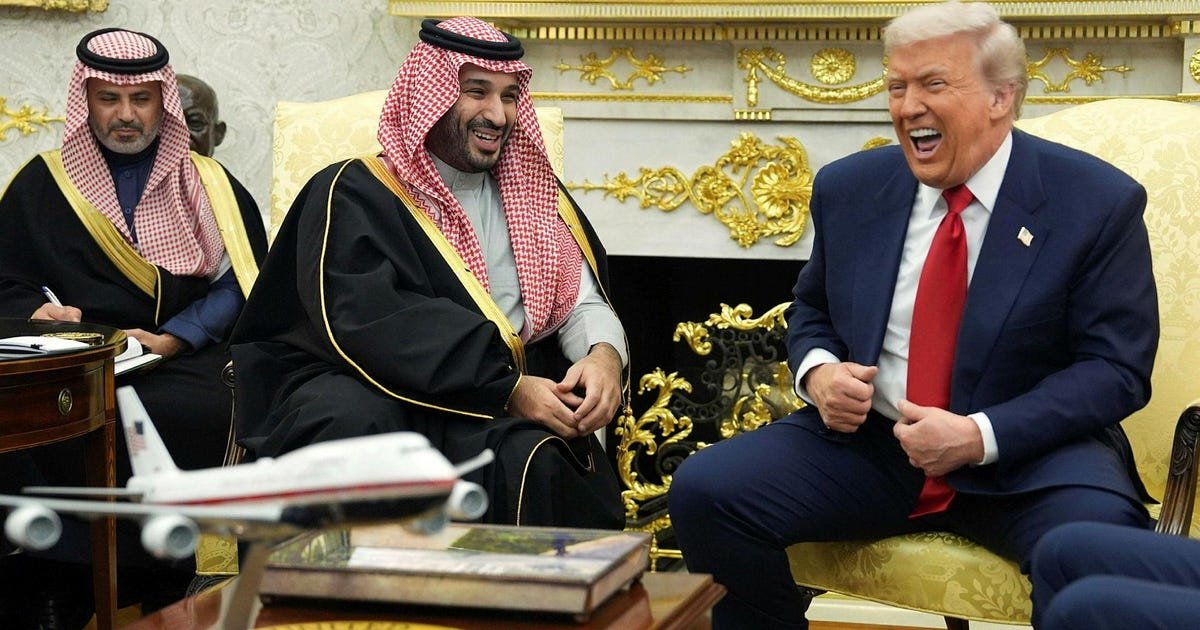
The evolving alignment between the United States and Saudi Arabia is increasingly shaping the strategic framework of American policy in the Middle East, reflecting a SYSTEM-DRIVEN shift in which regional partners exert growing influence over U.S. military posture, diplomatic priorities, and escalation management.
This dynamic is particularly visible in the way Washington calibrates its actions toward Iran across interconnected conflict zones.
What is confirmed in recent geopolitical reporting and policy behavior is that Saudi Arabia remains one of Washington’s most consequential regional partners, particularly in matters involving energy security, maritime stability, and containment of Iranian influence.
This relationship has long influenced U.S. decision-making, but recent developments suggest an intensified degree of consultation and alignment on regional security priorities.
The core issue is the balance of deterrence and de-escalation in a region where multiple conflicts overlap, including maritime tensions in the Gulf, proxy conflicts in Yemen, and instability in Iraq and Syria.
Saudi Arabia’s strategic priorities often center on limiting Iranian regional reach, while also avoiding uncontrolled escalation that could threaten its own infrastructure and economic transformation agenda.
Iran, for its part, operates across a network of allied groups and regional partners, giving it asymmetric leverage in several theaters.
This includes influence in Iraq through political and militia networks, support for Hezbollah in Lebanon, and ties to the Houthi movement in Yemen.
These relationships allow Iran to project influence without direct state-to-state confrontation, complicating traditional deterrence strategies.
The claim that Saudi Arabia is effectively shaping elements of U.S. military or diplomatic posture reflects a broader pattern of consultation rather than unilateral control.
U.S. strategy in the region is typically developed through alliance coordination, intelligence sharing, and joint security frameworks.
Saudi Arabia’s role is significant because of its geographic position, economic weight, and status as a primary energy exporter.
Recent regional developments have also highlighted a pragmatic recalibration among Gulf states, including limited diplomatic engagement with Iran in certain areas, even while underlying strategic rivalry persists.
This dual-track approach reflects an effort to reduce the risk of direct escalation while maintaining competitive positioning across the region.
From Iran’s perspective, shifts in Gulf-U.S. coordination can create openings in diplomatic and security space, particularly when regional actors diverge in their threat assessments or policy priorities.
Reduced cohesion among adversaries or competitors can allow Iran greater operational flexibility in proxy theaters or negotiations.
At the same time, the United States continues to balance competing objectives: maintaining the security of key allies, ensuring stability in global energy markets, and avoiding large-scale military escalation in an already fragmented regional environment.
Saudi Arabia’s influence is therefore one input among several shaping policy, rather than a singular determining factor.
The overall consequence is a fluid strategic environment in which regional powers, including Saudi Arabia and Iran, exert meaningful but not exclusive influence over U.S. decision-making.
This produces a shifting equilibrium where alliances, deterrence strategies, and diplomatic channels are continuously adjusted in response to overlapping conflicts and economic pressures.
This dynamic is particularly visible in the way Washington calibrates its actions toward Iran across interconnected conflict zones.
What is confirmed in recent geopolitical reporting and policy behavior is that Saudi Arabia remains one of Washington’s most consequential regional partners, particularly in matters involving energy security, maritime stability, and containment of Iranian influence.
This relationship has long influenced U.S. decision-making, but recent developments suggest an intensified degree of consultation and alignment on regional security priorities.
The core issue is the balance of deterrence and de-escalation in a region where multiple conflicts overlap, including maritime tensions in the Gulf, proxy conflicts in Yemen, and instability in Iraq and Syria.
Saudi Arabia’s strategic priorities often center on limiting Iranian regional reach, while also avoiding uncontrolled escalation that could threaten its own infrastructure and economic transformation agenda.
Iran, for its part, operates across a network of allied groups and regional partners, giving it asymmetric leverage in several theaters.
This includes influence in Iraq through political and militia networks, support for Hezbollah in Lebanon, and ties to the Houthi movement in Yemen.
These relationships allow Iran to project influence without direct state-to-state confrontation, complicating traditional deterrence strategies.
The claim that Saudi Arabia is effectively shaping elements of U.S. military or diplomatic posture reflects a broader pattern of consultation rather than unilateral control.
U.S. strategy in the region is typically developed through alliance coordination, intelligence sharing, and joint security frameworks.
Saudi Arabia’s role is significant because of its geographic position, economic weight, and status as a primary energy exporter.
Recent regional developments have also highlighted a pragmatic recalibration among Gulf states, including limited diplomatic engagement with Iran in certain areas, even while underlying strategic rivalry persists.
This dual-track approach reflects an effort to reduce the risk of direct escalation while maintaining competitive positioning across the region.
From Iran’s perspective, shifts in Gulf-U.S. coordination can create openings in diplomatic and security space, particularly when regional actors diverge in their threat assessments or policy priorities.
Reduced cohesion among adversaries or competitors can allow Iran greater operational flexibility in proxy theaters or negotiations.
At the same time, the United States continues to balance competing objectives: maintaining the security of key allies, ensuring stability in global energy markets, and avoiding large-scale military escalation in an already fragmented regional environment.
Saudi Arabia’s influence is therefore one input among several shaping policy, rather than a singular determining factor.
The overall consequence is a fluid strategic environment in which regional powers, including Saudi Arabia and Iran, exert meaningful but not exclusive influence over U.S. decision-making.
This produces a shifting equilibrium where alliances, deterrence strategies, and diplomatic channels are continuously adjusted in response to overlapping conflicts and economic pressures.
AI Disclaimer: An advanced artificial intelligence (AI) system generated the content of this page on its own. This innovative technology conducts extensive research from a variety of reliable sources, performs rigorous fact-checking and verification, cleans up and balances biased or manipulated content, and presents a minimal factual summary that is just enough yet essential for you to function as an informed and educated citizen. Please keep in mind, however, that this system is an evolving technology, and as a result, the article may contain accidental inaccuracies or errors. We urge you to help us improve our site by reporting any inaccuracies you find using the "Contact Us" link at the bottom of this page. Your helpful feedback helps us improve our system and deliver more precise content. When you find an article of interest here, please look for the full and extensive coverage of this topic in traditional news sources, as they are written by professional journalists that we try to support, not replace. We appreciate your understanding and assistance.