America’s Gerrymandering Arms Race Is Rewiring Elections Before Voters Cast a Ballot
Aggressive redistricting strategies by both major parties are reducing competitive elections, concentrating ideological power, and reshaping how Congress and state governments function.
State-controlled redistricting systems are now one of the most powerful forces shaping American politics, because the modern era of extreme gerrymandering increasingly determines election outcomes long before voting begins.
The central mechanism is structural: whichever party controls a state legislature after the census often controls how congressional and state legislative maps are drawn, allowing political leaders to engineer districts that maximize partisan advantage and minimize electoral risk.
What is confirmed is that both Republican- and Democratic-led states have intensified partisan mapmaking during the post-2020 redistricting cycle.
The result has been a nationwide escalation in heavily engineered districts designed to protect incumbents, lock in legislative control, and reduce the number of genuinely competitive races.
Courts have intervened repeatedly, but judicial rulings have produced uneven constraints because federal and state legal standards vary dramatically.
The current system emerged after decades of technological and legal evolution.
Modern political mapmakers now use advanced voter databases, demographic modeling, and precinct-level election data to predict voting behavior with extraordinary precision.
Earlier generations of gerrymandering relied on crude political assumptions and rough census estimates.
Today’s maps are built through highly detailed simulations capable of identifying individual neighborhoods likely to swing elections.
The practical effect is that many congressional elections are no longer decided in November general elections but in low-turnout party primaries dominated by ideologically committed voters.
In districts engineered to favor one party overwhelmingly, candidates face greater danger from primary challengers than from the opposing party.
That dynamic rewards ideological purity, punishes compromise, and pushes elected officials toward increasingly confrontational political behavior.
The transformation has altered Congress itself.
Safe districts reduce incentives for bipartisan coalition-building because lawmakers often view political moderation as a greater threat to reelection than polarization.
Members representing heavily partisan districts can adopt more aggressive rhetoric and more rigid policy positions without significant electoral penalty.
That contributes directly to legislative paralysis, budget confrontations, and the collapse of cross-party negotiation culture that once defined congressional dealmaking.
The effects are especially visible in the House of Representatives, where district boundaries determine every seat.
In several states, parties have secured durable congressional advantages even when statewide vote totals remain closely divided.
In some elections, a party has won a majority of congressional seats while receiving fewer overall votes statewide than its opponent.
That mismatch has intensified public debate over democratic legitimacy and voter representation.
Republican-controlled legislatures in states such as Texas, Florida, and North Carolina have pursued aggressive maps designed to maximize conservative representation.
Democratic-led states including Illinois, Maryland, and New York have also attempted highly favorable maps, though courts blocked or modified some of the most ambitious proposals.
The broader pattern is bipartisan escalation rather than unilateral abuse by a single party.
Legal oversight has weakened at the federal level.
A major turning point came when the U.S. Supreme Court ruled that federal courts could not adjudicate claims of partisan gerrymandering because the issue represented a political question outside manageable judicial standards.
That decision sharply reduced federal constraints on partisan mapmaking and shifted battles into state courts, state constitutions, and ballot initiatives.
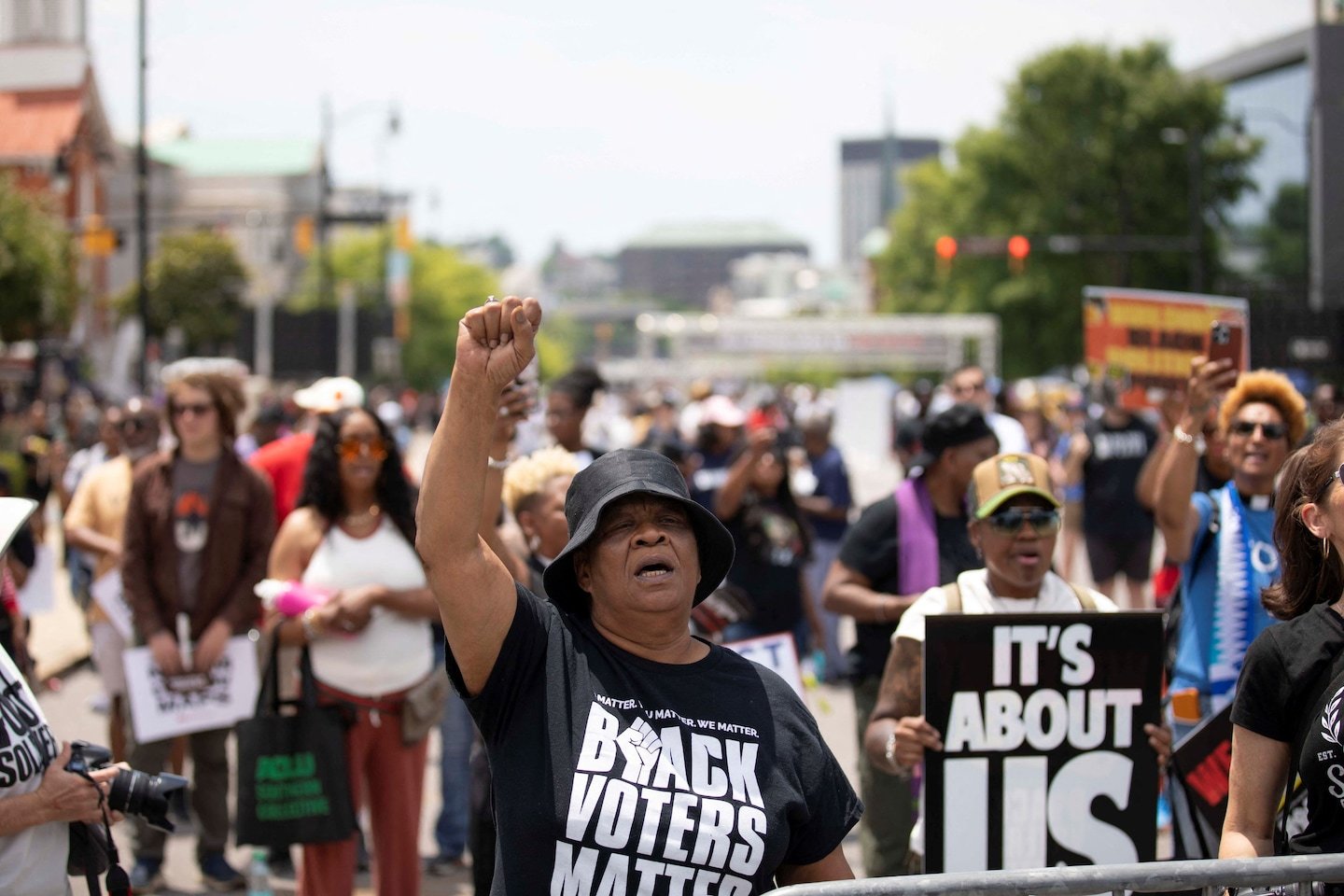
The Voting Rights Act remains an important but narrower legal tool.
Courts can still intervene when district maps dilute minority voting strength in ways that violate federal protections.
Several recent cases involving Black and Hispanic representation in southern states resulted in court-ordered redraws.
But racial gerrymandering claims and partisan gerrymandering claims operate under different legal standards, creating a fragmented enforcement system.
Independent redistricting commissions have emerged as one of the main reform efforts.
States such as Arizona, Michigan, and California now use commissions instead of legislatures to draw maps.
Supporters argue the commissions produce fairer and more competitive districts.
Critics counter that even supposedly independent systems often reflect underlying political biases or become arenas for procedural warfare.
The consequences extend beyond elections.
Gerrymandered legislatures can shape abortion policy, voting rules, education standards, taxation, immigration enforcement, and congressional certification procedures even when statewide public opinion remains closely divided.
That means district maps increasingly influence not just who governs but what policies become politically possible.
Public trust in democratic institutions has also suffered.
Many voters believe elections are manipulated through district design before campaigns even begin.
Political scientists have found that heavily engineered districts can reduce voter participation and reinforce perceptions that outcomes are predetermined.
The sense that politicians choose their voters rather than voters choosing politicians has become one of the defining criticisms of the current system.
The next major political battle is already taking shape ahead of the 2030 census.
Population shifts toward southern and western states are expected to trigger another high-stakes redistricting cycle with potentially massive implications for congressional power.
Both parties are investing heavily in state legislative races now because control of those chambers will determine who controls future maps.
The key issue is that gerrymandering no longer functions as a technical side process hidden inside election administration.
It has become a central operating system of American political power.
In many parts of the country, district boundaries now shape ideology, legislative behavior, voter participation, and national governance as decisively as the elections themselves.
The central mechanism is structural: whichever party controls a state legislature after the census often controls how congressional and state legislative maps are drawn, allowing political leaders to engineer districts that maximize partisan advantage and minimize electoral risk.
What is confirmed is that both Republican- and Democratic-led states have intensified partisan mapmaking during the post-2020 redistricting cycle.
The result has been a nationwide escalation in heavily engineered districts designed to protect incumbents, lock in legislative control, and reduce the number of genuinely competitive races.
Courts have intervened repeatedly, but judicial rulings have produced uneven constraints because federal and state legal standards vary dramatically.
The current system emerged after decades of technological and legal evolution.
Modern political mapmakers now use advanced voter databases, demographic modeling, and precinct-level election data to predict voting behavior with extraordinary precision.
Earlier generations of gerrymandering relied on crude political assumptions and rough census estimates.
Today’s maps are built through highly detailed simulations capable of identifying individual neighborhoods likely to swing elections.
The practical effect is that many congressional elections are no longer decided in November general elections but in low-turnout party primaries dominated by ideologically committed voters.
In districts engineered to favor one party overwhelmingly, candidates face greater danger from primary challengers than from the opposing party.
That dynamic rewards ideological purity, punishes compromise, and pushes elected officials toward increasingly confrontational political behavior.
The transformation has altered Congress itself.
Safe districts reduce incentives for bipartisan coalition-building because lawmakers often view political moderation as a greater threat to reelection than polarization.
Members representing heavily partisan districts can adopt more aggressive rhetoric and more rigid policy positions without significant electoral penalty.
That contributes directly to legislative paralysis, budget confrontations, and the collapse of cross-party negotiation culture that once defined congressional dealmaking.
The effects are especially visible in the House of Representatives, where district boundaries determine every seat.
In several states, parties have secured durable congressional advantages even when statewide vote totals remain closely divided.
In some elections, a party has won a majority of congressional seats while receiving fewer overall votes statewide than its opponent.
That mismatch has intensified public debate over democratic legitimacy and voter representation.
Republican-controlled legislatures in states such as Texas, Florida, and North Carolina have pursued aggressive maps designed to maximize conservative representation.
Democratic-led states including Illinois, Maryland, and New York have also attempted highly favorable maps, though courts blocked or modified some of the most ambitious proposals.
The broader pattern is bipartisan escalation rather than unilateral abuse by a single party.
Legal oversight has weakened at the federal level.
A major turning point came when the U.S. Supreme Court ruled that federal courts could not adjudicate claims of partisan gerrymandering because the issue represented a political question outside manageable judicial standards.
That decision sharply reduced federal constraints on partisan mapmaking and shifted battles into state courts, state constitutions, and ballot initiatives.
The Voting Rights Act remains an important but narrower legal tool.
Courts can still intervene when district maps dilute minority voting strength in ways that violate federal protections.
Several recent cases involving Black and Hispanic representation in southern states resulted in court-ordered redraws.
But racial gerrymandering claims and partisan gerrymandering claims operate under different legal standards, creating a fragmented enforcement system.
Independent redistricting commissions have emerged as one of the main reform efforts.
States such as Arizona, Michigan, and California now use commissions instead of legislatures to draw maps.
Supporters argue the commissions produce fairer and more competitive districts.
Critics counter that even supposedly independent systems often reflect underlying political biases or become arenas for procedural warfare.
The consequences extend beyond elections.
Gerrymandered legislatures can shape abortion policy, voting rules, education standards, taxation, immigration enforcement, and congressional certification procedures even when statewide public opinion remains closely divided.
That means district maps increasingly influence not just who governs but what policies become politically possible.
Public trust in democratic institutions has also suffered.
Many voters believe elections are manipulated through district design before campaigns even begin.
Political scientists have found that heavily engineered districts can reduce voter participation and reinforce perceptions that outcomes are predetermined.
The sense that politicians choose their voters rather than voters choosing politicians has become one of the defining criticisms of the current system.
The next major political battle is already taking shape ahead of the 2030 census.
Population shifts toward southern and western states are expected to trigger another high-stakes redistricting cycle with potentially massive implications for congressional power.
Both parties are investing heavily in state legislative races now because control of those chambers will determine who controls future maps.
The key issue is that gerrymandering no longer functions as a technical side process hidden inside election administration.
It has become a central operating system of American political power.
In many parts of the country, district boundaries now shape ideology, legislative behavior, voter participation, and national governance as decisively as the elections themselves.
AI Disclaimer: An advanced artificial intelligence (AI) system generated the content of this page on its own. This innovative technology conducts extensive research from a variety of reliable sources, performs rigorous fact-checking and verification, cleans up and balances biased or manipulated content, and presents a minimal factual summary that is just enough yet essential for you to function as an informed and educated citizen. Please keep in mind, however, that this system is an evolving technology, and as a result, the article may contain accidental inaccuracies or errors. We urge you to help us improve our site by reporting any inaccuracies you find using the "Contact Us" link at the bottom of this page. Your helpful feedback helps us improve our system and deliver more precise content. When you find an article of interest here, please look for the full and extensive coverage of this topic in traditional news sources, as they are written by professional journalists that we try to support, not replace. We appreciate your understanding and assistance.