US Senate hearing warns of rapid Chinese nuclear buildup ahead of Trump–Xi talks
Lawmakers and defense officials highlight China’s expanding missile forces as Washington seeks renewed arms control pressure during high-stakes diplomacy with Beijing
A US Senate hearing on nuclear deterrence has intensified scrutiny of China’s expanding strategic arsenal just hours before high-level talks between US President Donald Trump and Chinese President Xi Jinping, sharpening the geopolitical backdrop to already strained US–China relations.
What is confirmed is that the Senate Armed Services Committee convened a hearing focused on US nuclear deterrence posture and long-term modernization planning, drawing testimony related to the Department of Energy and the National Nuclear Security Administration’s nuclear security programs.
The session formed part of a broader review tied to the fiscal year 2027 defense authorization process and long-range nuclear force planning.
During the hearing, Senator Roger Wicker, the Republican chair of the committee, described China as undergoing what he called an “unprecedented nuclear expansion.” He cited the construction of large numbers of new missile silos, expansion of mobile ballistic missile forces, and development of sea-based and air-based nuclear delivery systems.
These remarks reflect a growing consensus in US defense planning circles that China is rapidly narrowing the gap in strategic nuclear capabilities.
The timing of the hearing is significant.
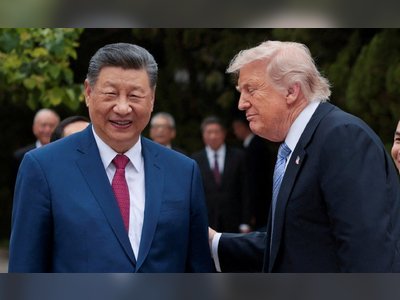
It took place shortly before scheduled bilateral meetings between Trump and Xi, placing nuclear competition and arms control concerns at the center of diplomatic engagement.
The US delegation to the talks includes senior defense and national security officials, signaling that military deterrence issues are expected to be part of broader strategic discussions.
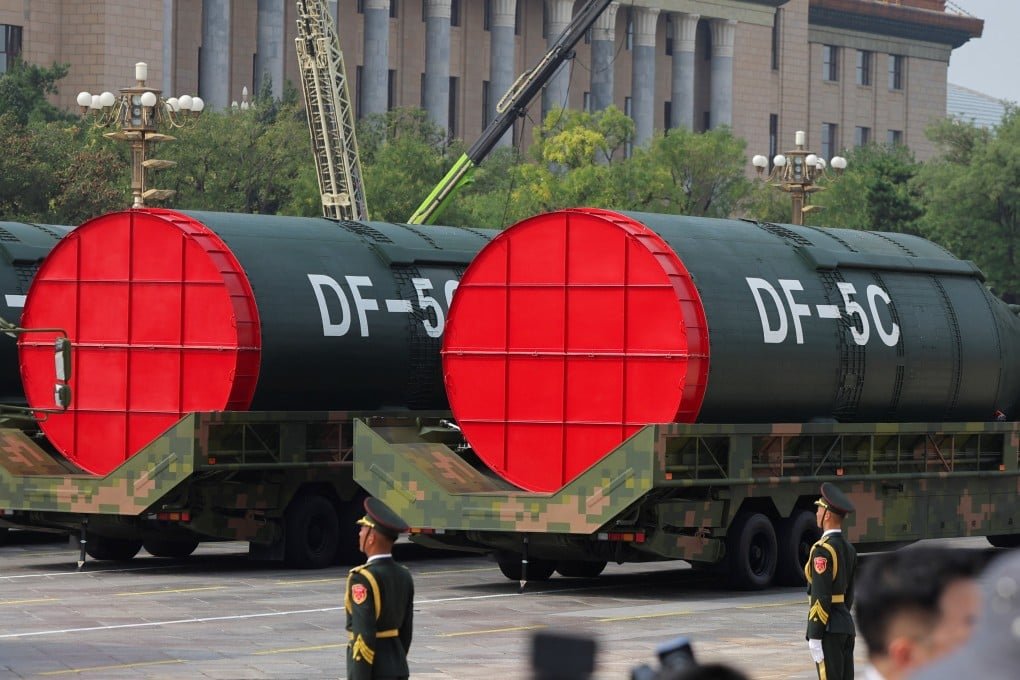
China’s nuclear modernization program has been underway for several years and includes the expansion of intercontinental ballistic missile infrastructure, increased deployment of road-mobile missile systems, and improvements in submarine-launched ballistic missile capability.
The US assessment is that these developments are aimed at ensuring a more survivable second-strike capability and increasing strategic leverage in any future conflict scenario.
US officials and lawmakers have increasingly framed China’s buildup as a structural shift in global nuclear balance rather than incremental modernization.
The concern is not only the size of the arsenal but also the speed of expansion, which has reportedly accelerated compared with previous decades of relatively limited growth.
The hearing also highlighted the status of global arms control frameworks.
The New Strategic Arms Reduction Treaty, the last remaining major bilateral nuclear arms control agreement between the United States and Russia, has effectively lapsed in its original form, and efforts to bring China into a trilateral arms control structure have so far made no progress.
Washington has repeatedly called for Beijing to join future arms limitation talks, but China has maintained that its arsenal remains far smaller than those of the United States and Russia and therefore does not fall under the same obligations.
The strategic context is further complicated by renewed debate inside Washington over US nuclear policy itself, including modernization of warheads, delivery systems, and missile defense.
These issues are now increasingly linked to broader great-power competition rather than Cold War-era bilateral deterrence logic.
The convergence of the Senate hearing and the Trump–Xi meeting underscores the extent to which nuclear strategy has returned to the center of US–China relations.
While diplomatic engagement continues, both sides are simultaneously expanding and modernizing their strategic forces, shaping a security environment defined less by arms limitation than by accelerated competition.
The immediate consequence of the hearing is an increased political push in Washington to treat China’s nuclear expansion as a central national security priority, feeding directly into upcoming defense budgeting decisions and the posture adopted during ongoing US–China negotiations.
What is confirmed is that the Senate Armed Services Committee convened a hearing focused on US nuclear deterrence posture and long-term modernization planning, drawing testimony related to the Department of Energy and the National Nuclear Security Administration’s nuclear security programs.
The session formed part of a broader review tied to the fiscal year 2027 defense authorization process and long-range nuclear force planning.
During the hearing, Senator Roger Wicker, the Republican chair of the committee, described China as undergoing what he called an “unprecedented nuclear expansion.” He cited the construction of large numbers of new missile silos, expansion of mobile ballistic missile forces, and development of sea-based and air-based nuclear delivery systems.
These remarks reflect a growing consensus in US defense planning circles that China is rapidly narrowing the gap in strategic nuclear capabilities.
The timing of the hearing is significant.
It took place shortly before scheduled bilateral meetings between Trump and Xi, placing nuclear competition and arms control concerns at the center of diplomatic engagement.
The US delegation to the talks includes senior defense and national security officials, signaling that military deterrence issues are expected to be part of broader strategic discussions.
China’s nuclear modernization program has been underway for several years and includes the expansion of intercontinental ballistic missile infrastructure, increased deployment of road-mobile missile systems, and improvements in submarine-launched ballistic missile capability.
The US assessment is that these developments are aimed at ensuring a more survivable second-strike capability and increasing strategic leverage in any future conflict scenario.
US officials and lawmakers have increasingly framed China’s buildup as a structural shift in global nuclear balance rather than incremental modernization.
The concern is not only the size of the arsenal but also the speed of expansion, which has reportedly accelerated compared with previous decades of relatively limited growth.
The hearing also highlighted the status of global arms control frameworks.
The New Strategic Arms Reduction Treaty, the last remaining major bilateral nuclear arms control agreement between the United States and Russia, has effectively lapsed in its original form, and efforts to bring China into a trilateral arms control structure have so far made no progress.
Washington has repeatedly called for Beijing to join future arms limitation talks, but China has maintained that its arsenal remains far smaller than those of the United States and Russia and therefore does not fall under the same obligations.
The strategic context is further complicated by renewed debate inside Washington over US nuclear policy itself, including modernization of warheads, delivery systems, and missile defense.
These issues are now increasingly linked to broader great-power competition rather than Cold War-era bilateral deterrence logic.
The convergence of the Senate hearing and the Trump–Xi meeting underscores the extent to which nuclear strategy has returned to the center of US–China relations.
While diplomatic engagement continues, both sides are simultaneously expanding and modernizing their strategic forces, shaping a security environment defined less by arms limitation than by accelerated competition.
The immediate consequence of the hearing is an increased political push in Washington to treat China’s nuclear expansion as a central national security priority, feeding directly into upcoming defense budgeting decisions and the posture adopted during ongoing US–China negotiations.
AI Disclaimer: An advanced artificial intelligence (AI) system generated the content of this page on its own. This innovative technology conducts extensive research from a variety of reliable sources, performs rigorous fact-checking and verification, cleans up and balances biased or manipulated content, and presents a minimal factual summary that is just enough yet essential for you to function as an informed and educated citizen. Please keep in mind, however, that this system is an evolving technology, and as a result, the article may contain accidental inaccuracies or errors. We urge you to help us improve our site by reporting any inaccuracies you find using the "Contact Us" link at the bottom of this page. Your helpful feedback helps us improve our system and deliver more precise content. When you find an article of interest here, please look for the full and extensive coverage of this topic in traditional news sources, as they are written by professional journalists that we try to support, not replace. We appreciate your understanding and assistance.